Clan Cameron
Cameron is a clan where the popular etymology and the likely history point in opposite directions. The famous story reads the name as Gaelic cam-shròn, “crooked nose” — a nickname-name exactly parallel to Clan Campbell’s cam beul, “crooked mouth”. It is memorable, and it may well be folk etymology.
Two origins
The scholarly view is more prosaic. The surname more likely comes from a place — most plausibly the lands of Cambrun (Cameron) held by a Lowland family in Fife — rather than from a Gaelic nickname probable [oxfordFNBI] . That reading has a documentary hook: men styled de Cambron swore fealty to Edward I in the Ragman Roll of 1296 — a Lowland family whose connection to the later Highland clan is possible but unproven contested [ragmanRoll1296] .
The honest position is that the two “Camerons” — a Lowland territorial family in the record from 1296, and the Gaelic clan of Lochaber — cannot be firmly joined. The Highland Clan Cameron emerges into clear light only around 1400, with Donald Dubh the first well-attested chief.
Lochaber and Lochiel
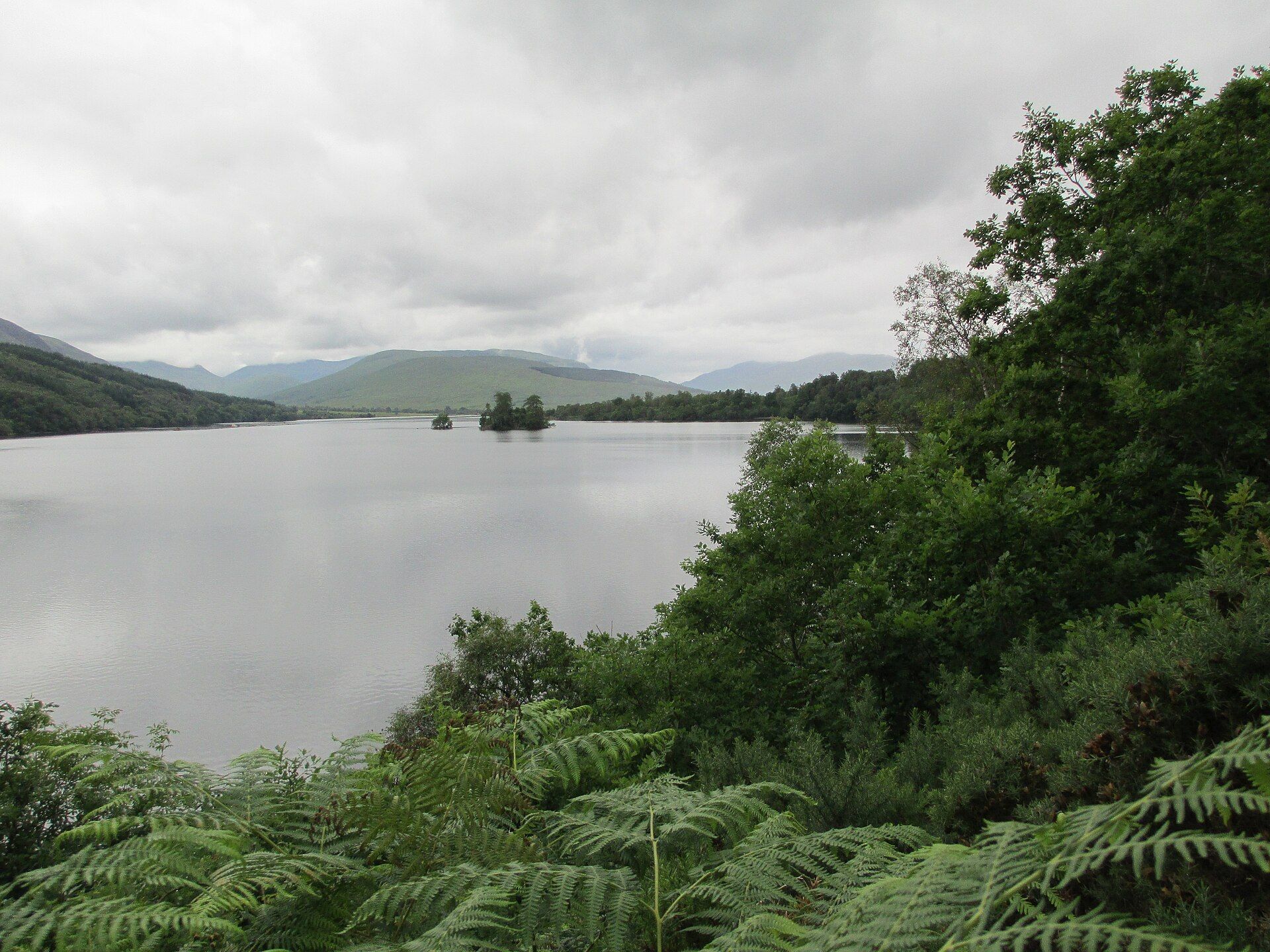
The clan’s country is Lochaber, in the western Highlands, and its chiefly line is Cameron of Lochiel, seated at Achnacarry. From the Camerons of Lochiel branched cadet houses including Cameron of Erracht — later famous for giving its tartan to the Queen’s Own Cameron Highlanders.
The Jacobite clan
More than most, the Camerons are bound to the Jacobite cause. In 1745 Donald Cameron of Lochiel — “the Gentle Lochiel” — pledged his clan to Charles Edward Stuart; his decision to come out was among the reasons the rising went ahead at all established [wikidata] . The Camerons fought at Culloden, and Achnacarry was burned in the reprisals that followed.
Status today
Clan Cameron is a living clan. Its chief, Cameron of Lochiel, is recognised by the Court of the Lord Lyon established [lordLyon] , still seated at Achnacarry in Lochaber.
Sources
-
[ragmanRoll1296]The Ragman Roll — instruments of homage and fealty of the Scots to Edward I of England, 1296 (ed. Bannatyne Club, 1834). Public domain (medieval documents; 1834 printed edition) -
[oxfordFNBI]Hanks, Coates & McClure (eds.), The Oxford Dictionary of Family Names in Britain and Ireland (OUP, 2016). Proprietary (OUP) — read & paraphrase + cite, never copy entries -
[wikidata]Wikidata. CC0 1.0 (public domain) · link -
[lordLyon]Court of the Lord Lyon — official roll of clans and chiefs. Crown copyright / unclear — cite, do not scrape · link