Clan Gordon
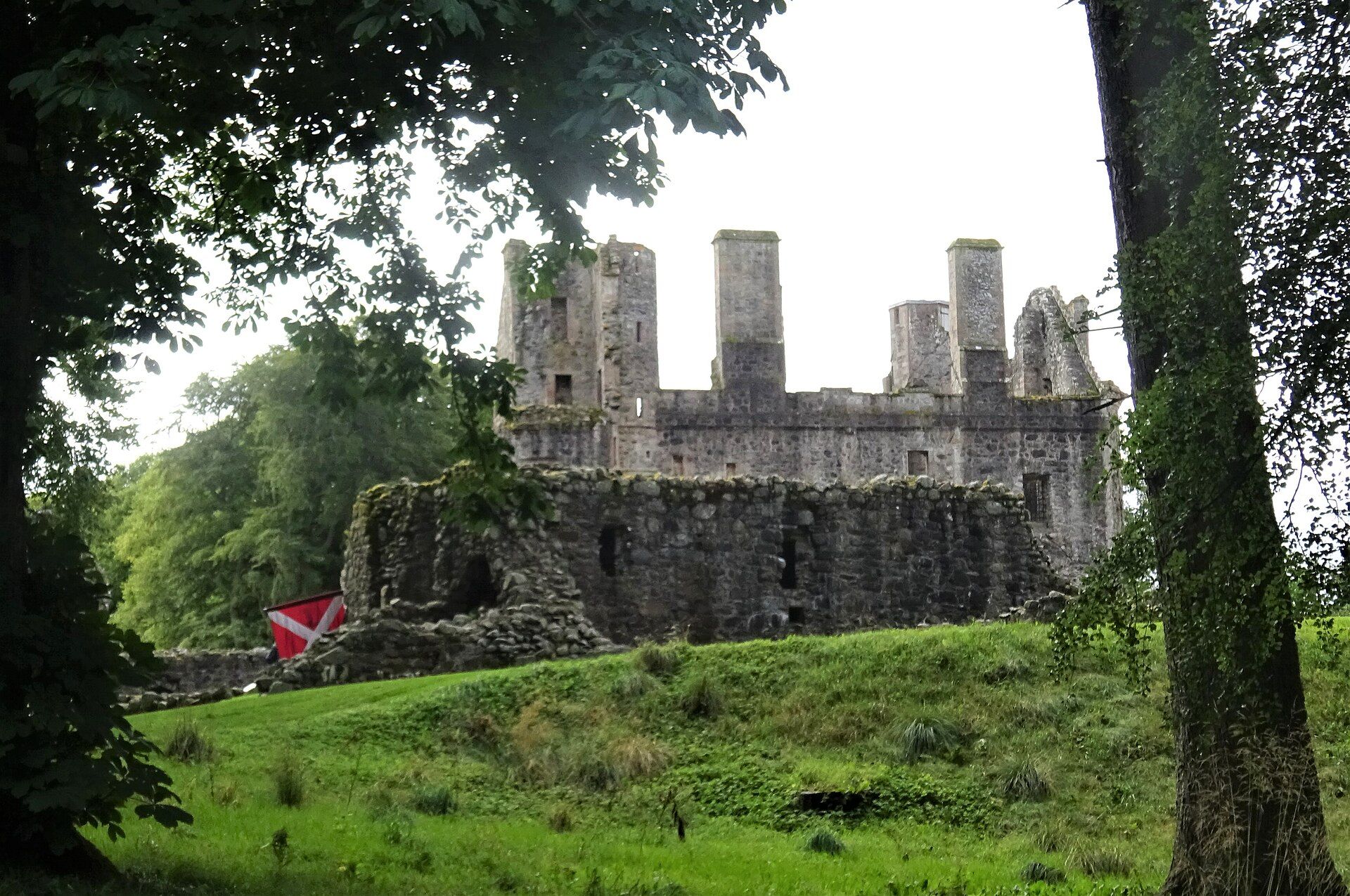
The Gordons are famous as the great clan of the north-east — but the name tells a different story from the tartan. Gordon is a territorial surname, taken from the lands of Gordon in Berwickshire, in the Scottish Borders established [oxfordFNBI] — its likely meaning something close to “spacious fort”, from old Brittonic elements, not a Highland patronymic. Like Clan Fraser, the Gordons were a southern family that became a northern power.
The earliest records — a Border family
The documented Gordons begin in the Borders, not the Highlands: Richard (Richer) de Gordon, lord of Gordon in the Merse, is on record in the 1170s — he granted land and the church of St Michael to the monks of Kelso established [poms] , and the family is traced through the Borders across the 13th century. The early forms are Norman-flavoured — de Gordon — the mark of an Anglo-Norman family settled into the feudal kingdom.
The move north — Strathbogie and Huntly
The turn came with the Wars of Independence. Sir Adam Gordon, a knight on record from 1296, backed Robert the Bruce established [poms] , and his loyalty was rewarded with the lordship of Strathbogie in Aberdeenshire. The Gordons renamed their new seat Huntly, after a place in their old Border parish — and from there grew into the dominant house of the north-east, their chiefs styled the Earls, then Marquesses of Huntly, and later Dukes of Gordon — known as the “Cock o’ the North” established [wikidata] .
Their name in the north-east
By the 17th century the Gordon name saturated Aberdeenshire. In the 1696 Aberdeen poll tax, Gordon is the single most common clan surname in the shire — the imprint of centuries of territorial power. Read honestly, that tells you the name was dominant in that country; it does not mean every Gordon there descended from the chiefly line. A common surname marks a place, not a bloodline.
Status today
Clan Gordon is a living clan. Its chief, the Marquess of Huntly, is recognised by the Court of the Lord Lyon established [lordLyon] ; the clan motto is Bydand (“steadfast”). Its great local rivals were the Forbeses, whose feud with the Gordons shaped the north-east for over a century.
Sources
-
[poms]People of Medieval Scotland, 1093–1371 (PoMS), poms.ac.uk (AHRC / Leverhulme; King’s College London & Univ. of Glasgow). Academic prosopography; publishes Linked Open Data (RDF). Used as a finding aid over public-domain charters. · link -
[oxfordFNBI]Hanks, Coates & McClure (eds.), The Oxford Dictionary of Family Names in Britain and Ireland (OUP, 2016). Proprietary (OUP) — read & paraphrase + cite, never copy entries -
[wikidata]Wikidata. CC0 1.0 (public domain) · link -
[lordLyon]Court of the Lord Lyon — official roll of clans and chiefs. Crown copyright / unclear — cite, do not scrape · link -
[aberdeenPollTax1696]List of Pollable Persons within the Shire of Aberdeen, 1696 (Spalding Club, ed. J. Stuart, 1844). Public domain (1844 printed edition of the 1696 tax record) · link